A student beginning a three-year degree today will graduate into a workplace shaped by technologies, roles and expectations that barely existed when they enrolled.
That is not a distant possibility. It is the reality of learning in an age of accelerated change.
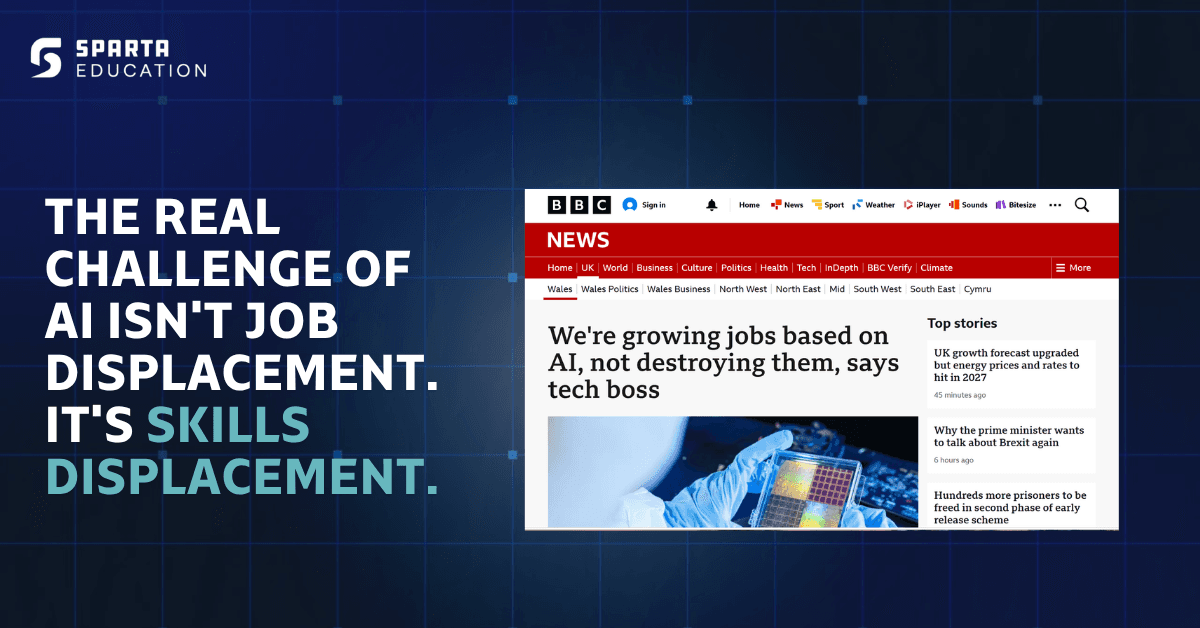
AI is already reshaping how organisations operate, how teams solve problems and what employers expect from the people joining them. In this environment, we need to ask a more demanding question of education:
Is it enough for learning to be academically rigorous if it is disconnected from the world students are preparing to enter?
I do not believe it is.
Knowledge remains essential. But knowledge without context can leave talented people qualified on paper and underprepared for the realities of work.
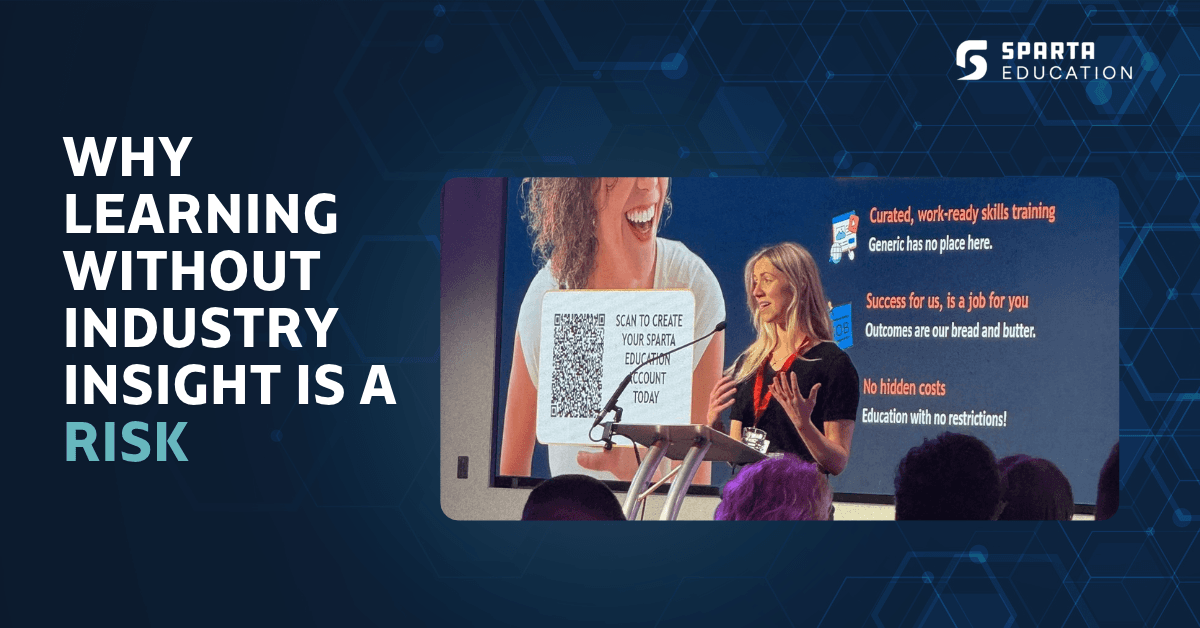
That is why learning without industry insight is not simply a missed opportunity. It is a risk.
The Gap Between Education and Employment Is Growing
The challenge is not that education lacks value. It is that the workplace is evolving at a pace few traditional learning models were designed to match.
The World Economic Forum identifies AI and big data, networks and cybersecurity, and technological literacy as the three fastest-growing skills. Its research draws on more than 1,000 employers representing over 14 million workers across 55 economies.
Read the Future of Jobs Report 2025
The implications go beyond learning individual tools.
We are moving towards a world in which careers will be shaped by continuous technological change. The most valuable professionals will not necessarily be those who mastered one system at one point in time. They will be those who understand how their field is evolving, recognise what new technology makes possible and continue adapting throughout their careers.
Education therefore has a responsibility to prepare people not just for their first role, but for change itself.
Knowledge Is the Foundation, Not the Destination
Universities play an essential role. They develop subject knowledge, intellectual discipline and the ability to think critically.
But theory alone cannot show a student how a modern data team operates, how AI is changing entry-level responsibilities or why a technically capable candidate might still struggle to demonstrate their value in an interview.
This gap is visible in what students themselves say they need. In Sparta Education’s student focus group, participants described a disconnect between the theoretical and analytical knowledge gained through STEM degrees and its application to technology roles, practical projects and technical assessments. They highlighted areas such as GitHub, Python, SQL and translating academic experience into workplace capability.
The answer is not to choose between academic depth and workplace relevance.
The future of learning must bring them together.
Employability should not be treated as something separate that begins when education ends. It should develop throughout the learning journey, helping people understand not only what they know, but where that knowledge fits, how it can be applied and why it matters.
Industry Insight Is Becoming a Core Capability
We often speak about industry insight as though it were an additional benefit: something useful to have once the “real” learning is complete.
I believe that view is outdated.
Industry insight is becoming a capability in its own right. It enables students to recognise emerging opportunities, make better decisions about what to learn and articulate their relevance to employers.
Students need four things alongside academic knowledge:
A view of how work happens
Students should understand how real teams use technology, data and AI to solve practical problems, with all the complexity that exists outside a textbook.
An understanding of employer expectations
They need visibility into how organisations identify potential, what hiring processes measure and why capable candidates do not always communicate their value effectively.
Exposure to emerging technology
Reading about change is not the same as experiencing it. Students need opportunities to engage with the tools reshaping the workplace, including generative AI, intelligent automation and AI agents.
The confidence to keep evolving
No course can predict every tool a student will encounter. Strong learning must therefore develop curiosity, judgement and adaptability, helping people remain capable when the technology changes again.
None of this diminishes the value of a degree.
It unlocks more of that value.
The Future Will Belong to the Industry-Aware
When candidates hold similar qualifications, the difference between them is often not how much they have learned. It is how well they understand the world in which they will apply it.
A graduate who can explain how AI is changing a data team, identify the opportunities and limitations of new tools, and connect their knowledge to a genuine business problem brings something more valuable than technical recall.
They bring perspective.
That perspective creates confidence in interviews, relevance in the workplace and a stronger foundation for long-term career growth.
The future will not belong solely to the people with the most knowledge. It will belong to those who can connect knowledge to change.
A New Model of Learning
At Sparta Education, we believe learning should move with industry rather than follow behind it.
That means building education around a live understanding of employer needs, emerging technology and the realities facing people at the beginning of their careers.
Our ambition is not simply to deliver more content. The world does not have a shortage of content.
Our role is to create greater clarity: helping learners identify which capabilities matter, understand how those capabilities are used and see where they could take them.
Through Sparta Education’s connection to the Sparta Global AI & Tech Institute, our learning combines technical development with practical career guidance. This reflects the wider direction established for the platform: helping learners build technical capability while understanding how it translates into roles, assessments and career opportunities.
Industry-informed learning should not chase every trend. It should help learners distinguish temporary noise from meaningful change.
That requires a closer relationship between educators, practitioners and employers, with insight flowing continuously between them.
Because when industry changes, learning should not take years to notice.
What Students Can Do Now
Students do not need to wait until their first job to begin developing an industry perspective.
They can start by following the work, not just the headlines. Read what practitioners, employers and industry bodies are saying about how roles are changing.
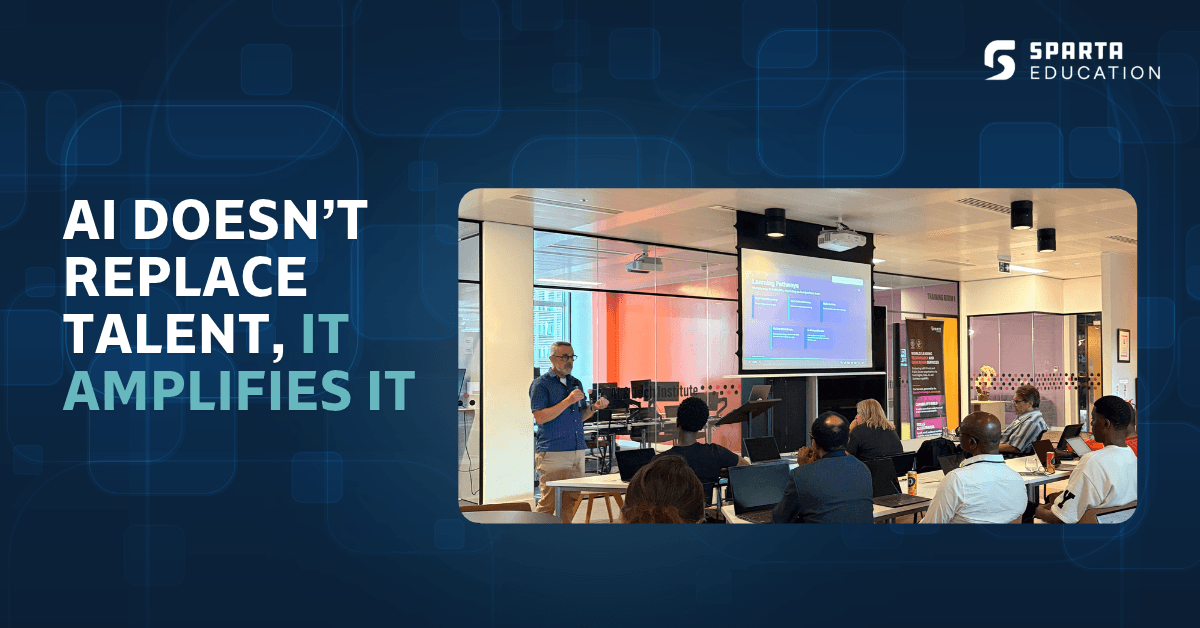
They can seek proximity to practice through meetups, hackathons and real projects. These experiences reveal how decisions are made and how knowledge is applied when the answer is not already written at the back of a textbook.
They can also become more selective about learning. The question should not only be, “What will this course teach me?” It should also be:
- Who shaped this learning?
- How recently was it updated?
- Where is this capability being used?
- What will I be able to understand or do differently afterwards?
These habits make the transition between study and work smaller. More importantly, they help students take ownership of their development rather than waiting for someone else to define what they need.
The Responsibility Goes Beyond Students
We should not place the burden of closing the skills gap entirely on those looking to start their career.
Education providers must create stronger connections with industry. Employers must communicate their changing needs more clearly and create meaningful routes for emerging talent. Industry practitioners must be willing to share how work is evolving rather than keeping that knowledge behind organisational walls.
If we want people to be ready for the future of work, we must give them a clearer view of it.
The challenge is shared, and the responsibility must be shared too.
The Bottom Line
The skills required by employers are changing. AI and other technologies are reshaping how work is organised, performed and valued. The World Economic Forum expects technological change, including advances in AI and information processing, to be among the major forces transforming organisations by 2030.
In that environment, learning disconnected from industry is not neutral.
It is a risk.
The students who thrive will not simply be those who complete the most courses or accumulate the most knowledge. They will be the ones who understand how their field is changing, recognise where their capabilities create value and continue learning as the world moves forward.
The future of education should not be about preparing people for a single job at a single moment in time.
It should prepare them to remain relevant, capable and confident throughout a lifetime of change.
That is the future we should be building.